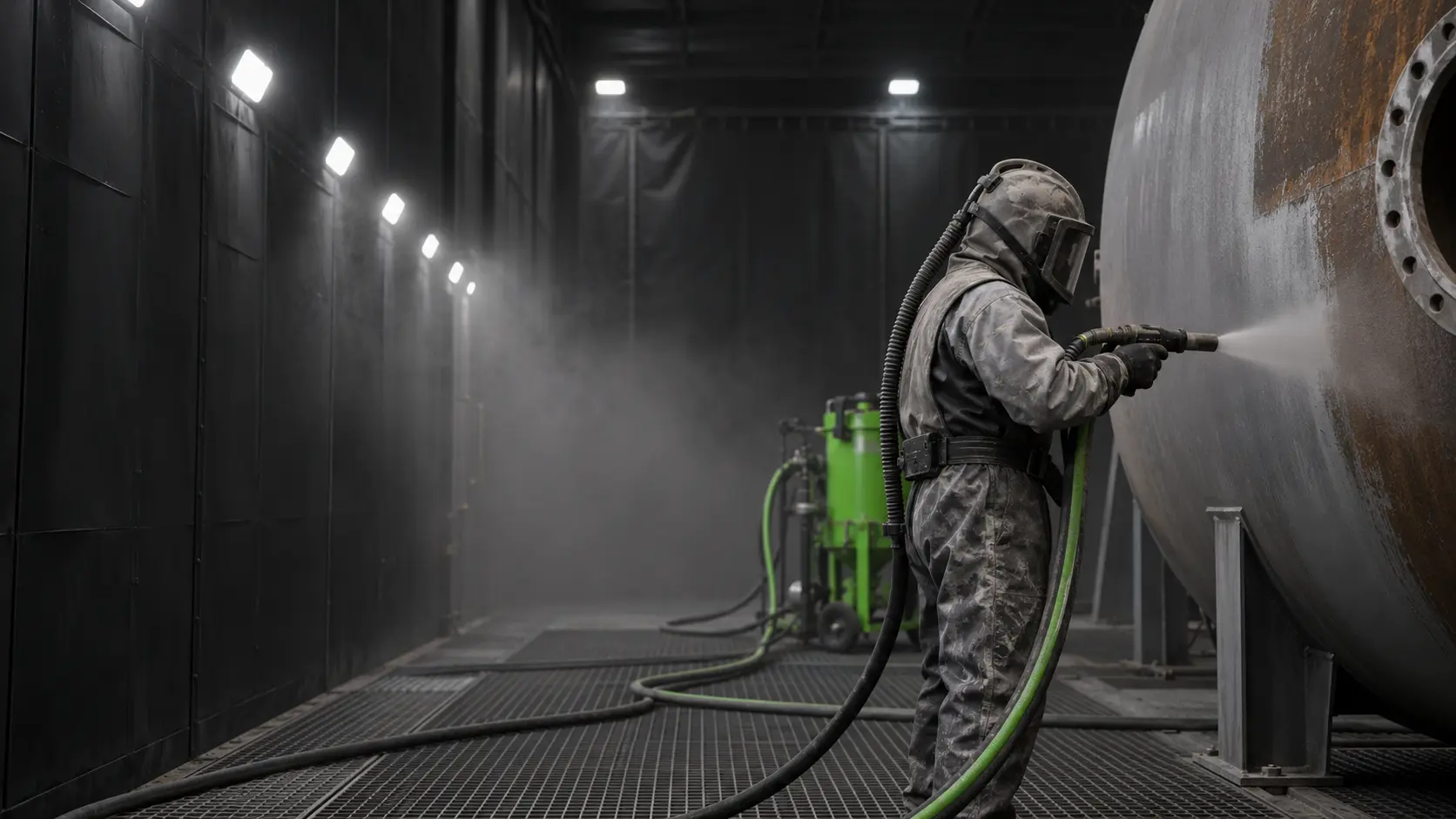
Industrial Abrasive Blasting Services
Remove corrosion, mill scale and failed coatings while producing the surface profile required for the specified protective system. Need media for your own crew? Ask about abrasive supply and delivery.
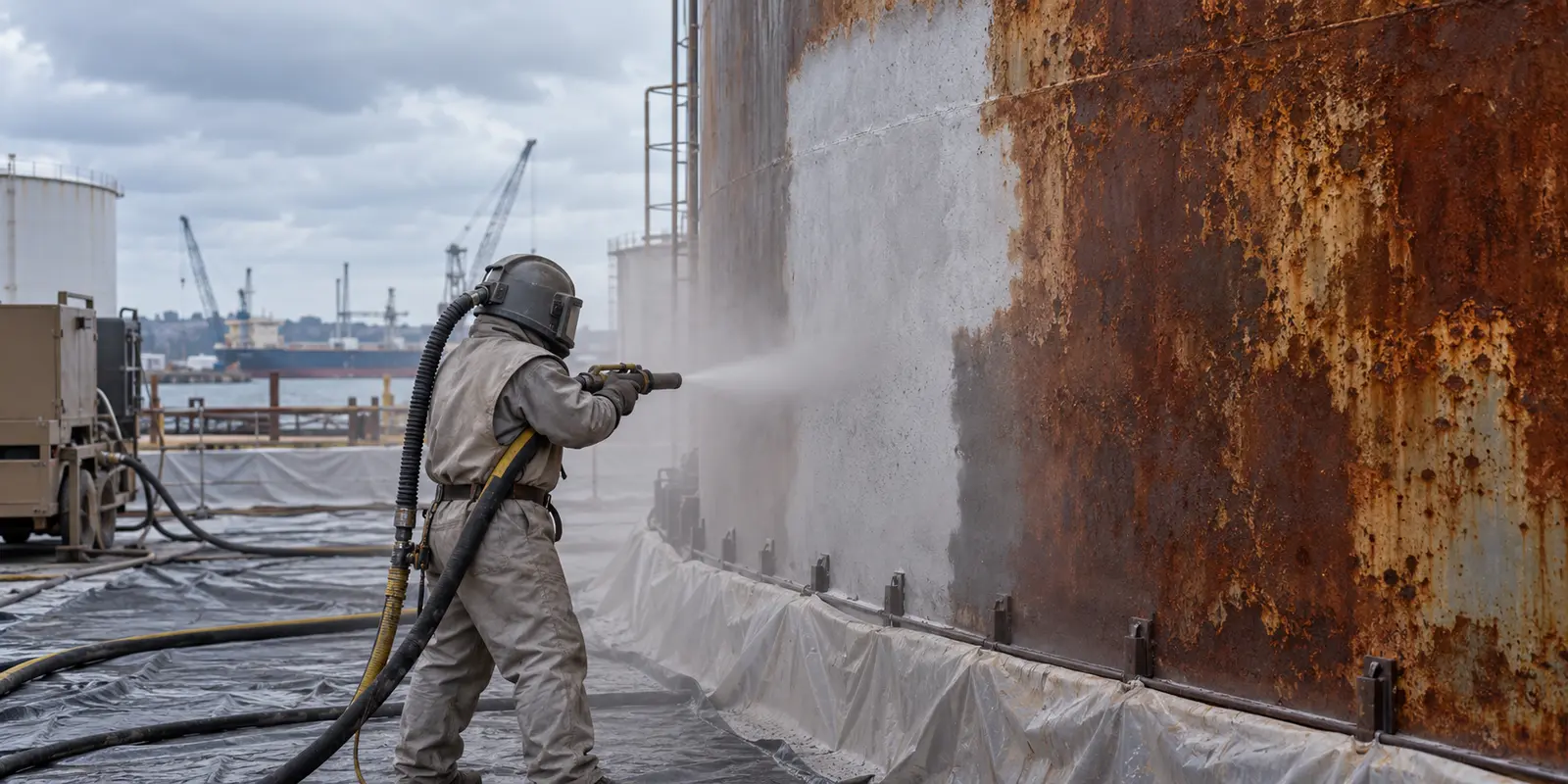
Built Around the Asset, Environment and Specification
Abrasive selection, nozzle control, cleanliness standard and target profile must work together. The scope is planned around the substrate, existing coating, containment needs and coating specification.
Common project needs
- Coating and corrosion removal
- Mill scale removal on new steel
- Surface-profile creation before coating
- Shop blasting for transported equipment
- Field blasting with project-specific containment
- Spot preparation and maintenance repair
What We Evaluate Before Work Begins
Existing Condition
Substrate, corrosion, contamination and coating failure guide the preparation plan.
Exposure
Salt, moisture, chemicals, heat, abrasion and immersion affect system selection.
Specification
Required profile, cleanliness, dry-film thickness and inspection hold points are reviewed.
Execution
Shop versus field work, access, containment, transport and schedule are coordinated.
Selection considerations
- Specified SSPC/NACE/AMPP cleanliness level
- Required anchor-profile range
- Abrasive type and contamination risk
- Soluble salts and surface contaminants
- Containment, dust and adjacent operations
- Time between blasting and priming
Related Services and Project Paths
Questions About Abrasive Blasting
Is abrasive blasting the same as sandblasting?
Sandblasting is a commonly used term, but industrial abrasive blasting may use different approved media selected for the substrate, profile and project controls.
What surface standard can you achieve?
The required standard is established by the project specification and verified against the agreed inspection criteria.
Can equipment be transported to your shop?
Yes. Shop work can combine transport coordination, blasting, coating and return-delivery planning.
Protect the Asset. Plan the Work. Get It Back in Service.
Share the asset, service environment, existing condition, specification and schedule.
Plan Abrasive Blasting Services around the actual asset.
Abrasive Blasting Services should be planned from the asset, exposure and project requirements, not from a generic product list. Dominant Service & Supply reviews abrasive selection, containment, surface preparation, profile development and spent-media handling before a crew, material or schedule is recommended. That keeps the scope tied to existing condition, the required preparation standard, the approved coating system and the access plan.
What the scope can include
A practical scope may include condition review, work-area planning, surface cleaning, preparation, masking and containment, application, touch-up, inspection support and closeout records. The sequence depends on whether the asset is in a shop, installed in the field, operating around other trades or being prepared during a shutdown. Interfaces are identified early so blasting, coating, painting, hauling and owner inspections do not compete for the same access or production window.
- Existing coating and substrate condition documented before work begins.
- Preparation method selected for the coating system, profile and service environment.
- Edges, welds, bolts, crevices, difficult geometry and repair areas included.
- Containment, ventilation, dust control, recovery and spent-material handling addressed where required.
- Stripe coats, full coats, recoat windows and dry-film checks coordinated with the specification.
Specification-first execution
Owners, engineers and coating manufacturers may define surface cleanliness, profile, environmental limits, mixing requirements, film thickness, cure windows and inspection hold points. Send the specification, coating data sheets, drawings, photographs and repair history with the request. If requirements are incomplete, we identify the information needed before pricing instead of assuming a system is suitable.
Salt exposure, immersion, splash zones, chemicals, heat, abrasion, washdown, weather and limited access can change the preparation and coating plan. A quote should account for containment, staging, access, cure time, recoat timing and the practical sequence around the asset.
Shop, field or combined execution
Some components are best prepared in a controlled shop environment; others must be addressed where installed. Large programs may use both approaches to protect schedule and quality. Material supply, abrasive blasting, protective coatings, painting and equipment movement can be discussed as one coordinated request, or quoted separately. Review the related abrasive blasting, protective coatings and facility capabilities pages.
Gulf Coast service-area planning
Dominant Service & Supply supports qualified projects across Louisiana, Mississippi, Alabama, Florida and Texas Gulf Coast markets. Include the asset location, site contact, access restrictions and target schedule so the request can be routed to the right marine or industrial workflow.
Build a quote-ready request
Send asset type, dimensions or quantities, photographs, existing coating condition, preparation standard, coating specification, work environment, access details, desired start window and whether material, hauling or field labor is included. Use the project quote form for the fastest review.
Abrasive Blasting Services FAQs
Can you quote from photographs?
Photographs can start the review, but final scope may depend on inspection, measurements, specification and access conditions. Send images and available project documents.
Do you supply materials as well as perform the work?
Material supply, abrasive media, hauling and coating execution can be discussed together when the project requires it. The quote will identify what is included.
What service area do you cover?
We review qualified marine and industrial work throughout the Gulf Coast. Mobilization and delivery are confirmed from the site, schedule and scope.