
Industrial coating applications / Structural Steel Coatings / Structural Steel Connection Coating Repairs
Identify each connection and the repair objective
Describe the connection by its actual location and assembly: beam to column, brace plate, splice or equipment support. Provide an overview photograph and closer views of the affected faces. Reference the drawing, grid or asset identifier used by the facility so a reviewer can distinguish one joint from another without relying on an unmarked close-up.
State whether the issue is coating damage, visible corrosion, installation touch-up or a larger maintenance campaign. Coating work addresses a defined surface-protection scope. Suspected section loss, movement, damaged fasteners or other integrity concerns need review by the responsible owner or qualified specialist before the coating boundary and work sequence can be finalized.
Separate exposed surfaces from inaccessible interfaces
A connection contains more than the outward face of a plate. Review flange edges, bolt groups, washers, plate edges and the underside of accessible components. Identify surfaces hidden behind overlapping steel or adjacent equipment. Treat inaccessible interfaces as a specific scope limitation rather than assuming that an exterior coating application reaches every concealed surface.
If disassembly, fastener replacement or other mechanical work is needed, assign that work and its release requirements separately. Coating personnel should receive an agreed assembly condition for their portion of the work. Do not make unapproved changes to a connection to gain access, and do not describe painting as correction of an unresolved structural problem.
Review retained coating and local preparation
Include the existing coating specification and available maintenance records. Show where film is intact, lifting, worn or stained, and identify any previous patches around the joint. The repair approach must consider the retained coating as well as exposed steel; applying a new layer over weak or incompatible material can leave the underlying problem unresolved.
Agree on preparation methods and acceptance requirements for the actual surfaces. Restricted geometry may affect tool access, debris control and the ability to inspect an edge. Where the extent of removal is uncertain, define the initial repair boundary and the process for documenting any justified expansion. Keep quantity assumptions visible in the quotation and daily records.
Resolve fastener and edge treatment details
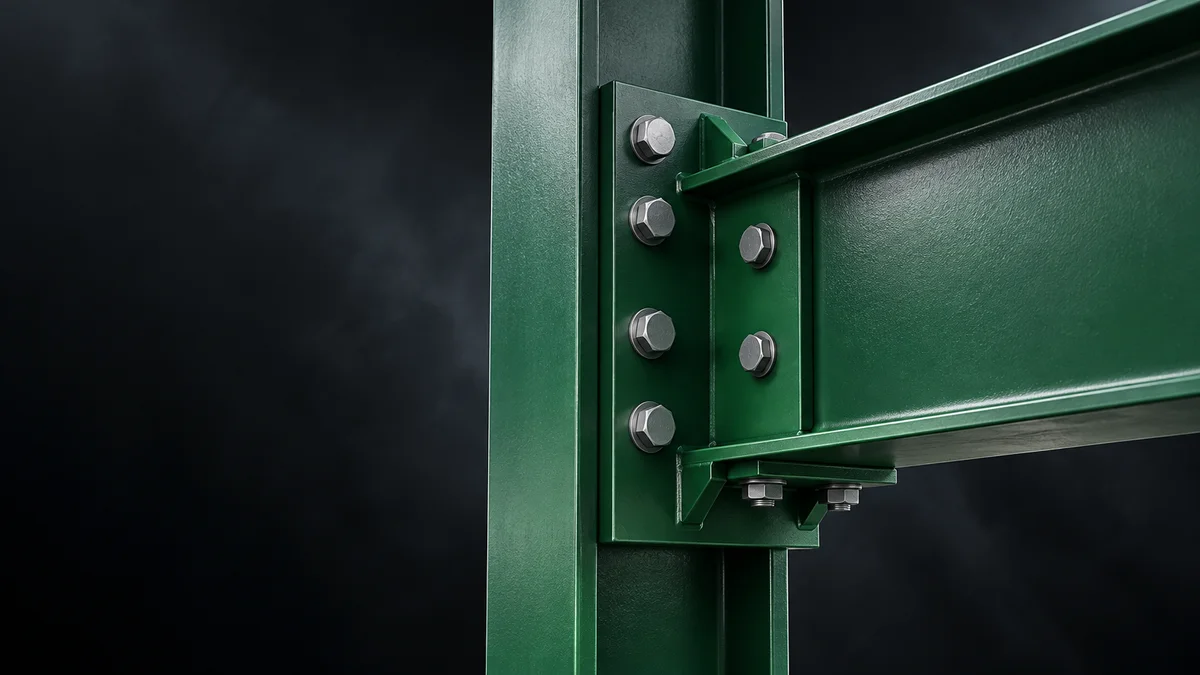
Bolts, nuts, washers, sharp edges and weld profiles create changes in geometry that need attention in a coating specification. Identify which exposed fastener surfaces receive the system and which surfaces must remain protected or accessible for another task. Use the approved project and product requirements for detail treatment and any stripe-coating sequence.
Connections may include galvanized components, previously painted surfaces or materials requiring different preparation. Record those differences rather than treating every silver or painted component as identical steel. If a fastener or connection is scheduled for another contractor’s work, coordinate its final condition and timing so coating is not immediately damaged or applied to a surface that should remain untreated.
Provide access without hiding inspection surfaces
The access plan should allow preparation, application and review of the intended repair faces. A joint visible from the floor may still have surfaces that cannot be reached from the proposed position. Include elevations, obstructions, surrounding pipework and the party supplying access equipment in the quotation information.
Account for protection of adjacent equipment, floor areas and operating routes. Describe where collected debris and masking will be handled under the actual site arrangements. If a connection is part of a phased structure, define the released zones and the limits of concurrent work. Access removal should be coordinated with inspection rather than assumed immediately after application.
Define the coating scope before pricing
Send the asset or work-zone details, photographs where relevant, applicable requirements and proposed access window. Identify the responsibilities and scope questions you need resolved so the quotation can address the actual project.
Tie the repair system to actual exposure
Provide the operating environment, cleaning practices and any chemical, marine or elevated-temperature exposure relevant to the joint. Shelter from direct rain does not by itself establish a benign environment; the owner’s exposure requirements and the selected system should guide the scope. Include coating thickness, application intervals and other specified acceptance items in the work package.
A connection repair should integrate with the surrounding protective system. Identify the treatment at transition edges and any requirement for an approved trial area or manufacturer review. Do not choose a product solely because its finish resembles the adjacent paint. The proposed materials and preparation need to support the agreed service conditions and compatibility requirements.
Map inspection and exceptions by joint
Use the connection identifier in preparation records, application notes, photographs and any required measurements. Record which faces were included and any inaccessible portions. If a reading or visual review identifies a concern, locate it precisely enough for correction and reinspection; a general statement that a frame was checked can be too broad for a local connection repair.
Separate an observed coating condition from its disposition. The responsible reviewer should identify the required corrective action and the evidence needed to close it. Where engineering or mechanical concerns remain open, keep that status visible rather than allowing completion of the paint work to imply release of the entire structural assembly.
Build a quote around the connection list
Send a numbered joint list, photographs, approximate repair areas and the relevant coating requirements. Add access conditions, operational restrictions, expected release windows and known integrity concerns. Where several similar connections are involved, identify both the typical detail and the exceptions so repeated joints can be priced without overlooking unusually congested or inaccessible locations.
Dominant Service & Supply, LLC serves customer facilities and job sites from its Harvey operating base. Call or text 504-579-4330 or submit the project details for a scoped quotation. Calls and texts are monitored 24/7; site visits, access, coating work and project availability are arranged according to the actual scope and operating requirements.
Structural Steel Connection Coating Repairs FAQs
What counts as a structural steel connection coating repair?
It is a defined protective-coating repair at an identified joint, including the exposed surfaces agreed in the scope. The work may involve preparation, detail treatment and recoating, while structural integrity and mechanical changes remain separately assigned responsibilities.
Does painting a corroded connection confirm it is structurally sound?
No. Visible deterioration or suspected integrity issues require review by the responsible owner or qualified specialist. Establish the acceptable substrate and assembly condition before coating, and keep unresolved engineering concerns separate from completion of surface-protection work.
Can coating reach between overlapping plates?
An exterior application does not establish treatment of hidden contact surfaces. Identify inaccessible interfaces and any approved disassembly requirements. The quotation should state which faces can be prepared and coated and how excluded interfaces are handled.
Are bolt replacement and tightening part of the coating scope?
They are not automatically included. Assign mechanical and structural tasks explicitly, with the required release condition for coating. Do not assume access to a fastener permits its adjustment, removal or replacement during a protective coating repair.
What photographs should I send?
Send an overview locating the joint and close views of each affected accessible face. Include an asset, grid or connection identifier, approximate dimensions, obstructions and visible coating defects so the review can be tied to the actual location.
Do connection repairs always need complete coating removal?
The required removal depends on retained-film condition, compatibility and the approved specification. The repair scope should describe the treatment of bare steel, retained coating and transition edges rather than applying a single assumption to every joint.
Why do edges and fasteners need specific attention?
Their geometry affects preparation, application and inspection access. The project specification should identify the required detail treatment and any stripe-coating sequence. Accessible bolt heads, plate edges and other features should remain distinguishable in the repair plan.
Can galvanized components be treated like adjacent painted steel?
Do not assume identical preparation or coating requirements. Identify galvanized and other differing surfaces during the review and follow the approved system requirements. A mixed-material connection may need more than one preparation or protection detail.
How are additional repair areas controlled?
Define the initial boundary, record newly exposed conditions and use the agreed approval process for expanded work. Include how additional quantities are measured so the owner can distinguish the original connection scope from approved changes.
When should access equipment be removed?
Coordinate removal with the required application, curing and inspection stages. The plan should leave necessary surfaces reachable for review and correction. The specific release sequence depends on the coating system and the project’s acceptance requirements.
Can several similar joints be included in one inquiry?
Yes. Provide a numbered connection schedule with a typical detail and identify exceptions in condition, access or coating requirements. This allows repeated work to be considered together while keeping unusual joints and quantity assumptions visible.
Where does Dominant perform connection coating repairs?
Dominant Service & Supply, LLC travels to customer facilities and job sites from Harvey, Louisiana. Contact 504-579-4330 with the connection list and operating requirements; visits and field work are arranged for the particular project.
Discuss your coating project
Dominant Service & Supply, LLC serves Gulf Coast customer facilities and job sites from Harvey, Louisiana. Call or text 504-579-4330, or send the project details for a scoped quotation.