
Industrial coating applications / Structural Steel Coatings / Canopy Steel Protective Coatings
Define the canopy steel and adjacent roof interfaces
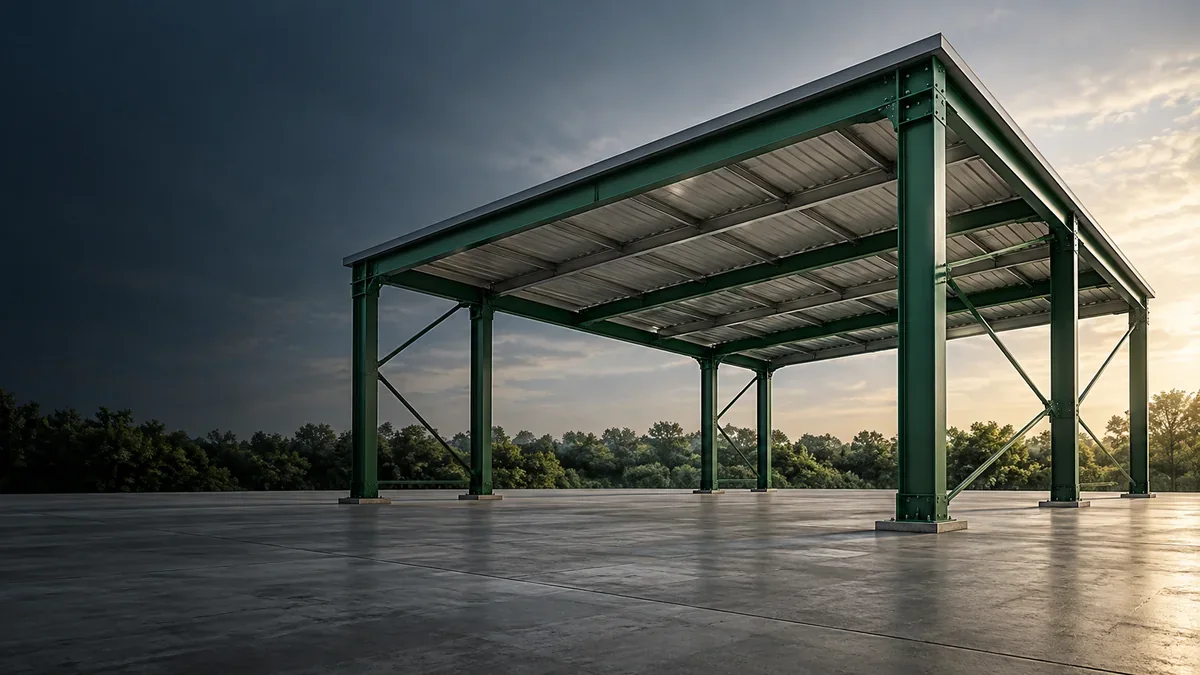
Provide the canopy location, general arrangement and marked photographs showing included columns, beams, bracing, brackets and accessible connections. Add dimensions and identify which faces are reached under the proposed access arrangement. Distinguish steelwork from roof panels, gutters, soffits, lighting and attached services. An overall roof footprint can help locate the asset but does not by itself measure every steel surface or explain the terminations and protection needed at adjoining materials.
State whether the package covers selected deterioration, a full accessible-steel renewal or an initial condition review. Mark concealed contact faces and components requiring another party's authorized removal. The owner and appropriate design or equipment parties should resolve structural condition, attachments and roof-performance questions. Coating maintenance should follow those decisions and defined release conditions, without implying that a new finish establishes capacity, repairs a roof leak or approves a changed canopy arrangement.
Assess weathered faces, lower supports and retained finish
Locate coating loss, corrosion, previous repairs and recurring wet areas against column or bay references. Include exposed tops, sheltered undersides, connection details and lower supports where accessible. Provide the existing system and cleaning or service exposure information. A canopy can contain different surface conditions within a small area, so the scope should connect preparation boundaries to the observed steel rather than assume every face needs the same level of maintenance.
Identify substrate differences, retained coating and any areas needing closer access before the final method is agreed. Review preparation and compatibility against the approved system requirements. If deterioration is connected to unresolved drainage, roof or steel defects, identify the responsible separate review and timing. Record the process for additional findings during preparation so newly exposed conditions can be assessed and authorized without either hiding the defect or expanding the work beyond the agreed surface package.
Plan customer operations beneath and beside the canopy
The owner should identify the use of the covered area, including delivery routes, equipment access, loading activities or pedestrian movement where relevant. Establish the released work zones and permitted working windows with the responsible parties. Include temporary protection, alternative routes and movement of customer property in the scope interfaces. A quotation should use the actual availability beneath the steel, rather than assume the canopy can be closed continuously or that normal activity can continue directly under every preparation stage.
Describe access equipment, setup areas, overhead services and restrictions affecting the chosen preparation and application method. Identify nearby vehicles, stock and surfaces requiring protection under the approved arrangement. If work is phased by bay or column line, state the repeated setup and inspection requirements. The owner controls operational release, and the coating sequence should remain connected to that release and the relevant product stages rather than promise an unrestricted work area based only on a preferred completion date.
Detail roof edges, attachments and coating terminations
Map where steel coating stops at roof sheets, flashing, gutters, electrical equipment, signs and other attachments actually present. Assign removal, protection and reinstatement to the appropriate parties. Identify functional interfaces and asset information that must remain visible. A broad request to paint a canopy can otherwise conceal different assumptions about roof finishes, sealed details and surfaces accessible only after another trade changes the arrangement.
Use the approved system to define preparation, application and any required connection-detail review. Where different substrates or retained products meet, record compatibility and the agreed transition. Include the sequence for later attachment work and any authorized touch-up. Roof watertightness and drainage changes should remain separate defined responsibilities; the steel package can identify its coating boundary around those interfaces without claiming that paint alone resolves an unreviewed building-detail or water-management issue.
Inspect the steel before reopening each work zone
Set preparation observations, material traceability, application information and acceptance requirements before access equipment is removed. Locate records by canopy bay, column or member reference. Include the required review of edges, connections and other included details while they remain reachable. If access prevents a specified check, record the limitation and obtain the appropriate project disposition rather than treating an overall image of a newly colored canopy as proof of inspection coverage for every face.
Document repairs, exclusions and outstanding work, then distinguish coating acceptance from the owner's decision to resume customer activity. Follow the approved system requirements for the relevant handling, access and service stages. Closeout should identify the treated steel, finish, repair boundaries and later attachment or handling damage. That record helps the maintenance team plan future work and locate recurring wet areas without confusing a surface-protection package with a completed roof or structural assessment.
Define the coating scope before pricing
Send the canopy steel map, condition photographs and customer-use plan. Define roof interfaces, released zones and required inspections before comparing protective-coating quotations.
Request a canopy-specific coating quotation
Send the canopy location, steel arrangement, quantities, photographs, existing coating information and specification. Include customer use below the work, released zones, access restrictions, protection and required inspections. List separate roof, electrical, attachment or steel repairs and their sequence. If adjacent facility steel is also being considered, show it separately so the quotation still states the canopy's operating interfaces and preparation boundaries instead of relying on an unqualified overall building-maintenance allowance.
Dominant Service & Supply, LLC is based in Harvey, Louisiana, and serves customer facilities and job sites through agreed project arrangements. Call or text 504-579-4330 or submit Request a Quote with the canopy details. The surface package, access and timing can then be reviewed against the actual customer location. The Harvey operating base is not a customer-facing storefront; specialized work locations and any receiving arrangements are coordinated directly for the approved scope.
Canopy Steel Protective Coatings FAQs
Which canopy surfaces should be identified?
List included columns, beams, bracing, brackets and accessible connections with dimensions or quantities. Separate roof covering, gutters, lighting and other attached materials. Mark accessible faces, concealed interfaces and the coating terminations so the quotation describes actual steel surfaces rather than only the roof footprint.
Does steel coating include roof-leak repairs?
Roof defects, drainage changes and watertight details require their own defined responsibilities and appropriate review. Identify those dependencies before finalizing the affected steel package. Coating work should show its surface boundary around roof interfaces without implying that a new finish resolves an unreviewed building issue.
Can customer activity continue beneath the work?
Provide the owner's operating requirements and proposed released zones for review. The responsible parties must establish protection, separation and alternative routes where needed. Pricing should reflect the actual work windows and access arrangement rather than assume uninterrupted activity directly beneath every coating stage.
Does repainting establish the canopy structural condition?
Structural adequacy, attachments and configuration require the appropriate owner and specialist decisions. Identify separate steel repairs and approvals before affected surfaces are released. Coating acceptance concerns the defined protective finish and should not be presented as approval of canopy loading or a changed structural arrangement.
Why identify sheltered and exposed faces?
They may present different coating conditions and access requirements within the same canopy. Locate deterioration, retained coating and recurring wet areas by member reference. The preparation scope should follow the actual review and approved system, with any closer survey or unresolved condition clearly identified.
Are signs and electrical attachments removed?
Removal, protection and reinstatement require an expressly agreed scope with the appropriate parties. Mark the attachments and affected coating boundaries. A steel-painting quotation should not silently authorize electrical work or changes to signs and equipment merely because they are fixed to a canopy member.
Can the canopy be coated bay by bay?
Provide the owner-approved release areas, dates and operating interfaces. Identify repeated access, protection and inspection stages between bays. The quotation should show those assumptions so a phased package is compared with an equivalent arrangement rather than a price based on continuous unrestricted closure.
How are different materials treated?
Identify the actual substrates and retained products, then review preparation, compatibility and terminations against the approved requirements. Roof sheets, galvanized components and painted steel should not automatically be treated as one uniform surface package simply because they belong to the same canopy.
What happens if preparation reveals another defect?
Locate the finding and notify the responsible reviewer under the agreed process. Establish whether it changes the coating boundary or requires another party's repair. Record the authorized disposition before expanding preparation or covering a condition that remains unresolved.
When should access equipment be removed?
Keep the access needed for required preparation and coating checks until the relevant review is complete. Record outstanding items and exclusions by bay or member. Removal and reopening the work zone should follow the approved coating stages and the owner's separate operational-release arrangements.
What records support later canopy maintenance?
Retain the surface map, approved system, relevant application and acceptance evidence, repairs and exclusions. Locate later attachment damage or recurring wet areas. Distinguish steel-coating closeout from roof and structural assessments so future work can use the actual maintenance boundary and responsible records.
How do we obtain canopy coating pricing?
Send the steel map, quantities, condition photographs, specification and proposed work windows. Include customer activity, protection, attachments and inspection requirements. Call or text Dominant Service & Supply, LLC at 504-579-4330 or use Request a Quote to review the defined canopy package.
Discuss your coating project
Dominant Service & Supply, LLC serves Gulf Coast customer facilities and job sites from Harvey, Louisiana. Call or text 504-579-4330, or send the project details for a scoped quotation.