
Industrial coating applications / Marine and Coastal Coatings / Mooring Bollard Protective Coatings
Organize the job by bollard, not just dock length
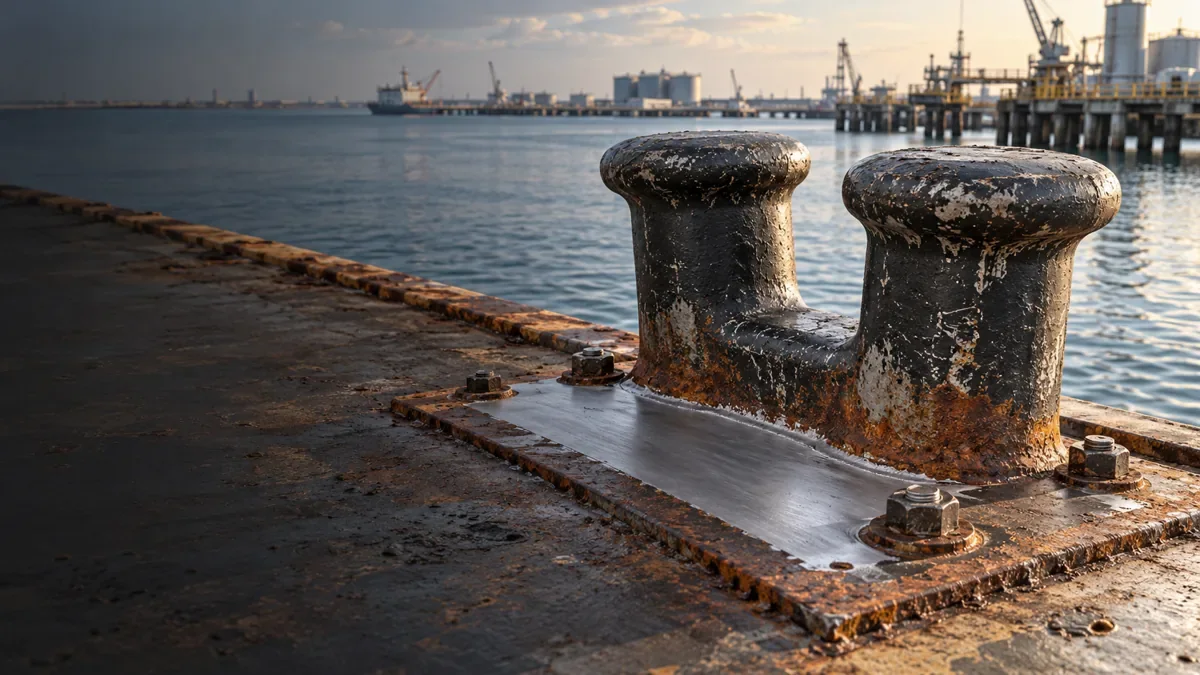
A dock-wide repaint allowance can hide the effort in individual mooring fittings. List each bollard by the owner’s identification system and record its configuration, approximate dimensions, mounting arrangement and condition. Include the heads, neck, body, base and accessible fasteners where those surfaces belong to the coating scope. Different fitting shapes present different preparation and coverage problems, even when their overall heights are similar.
Photographs should show the complete fitting, its base and the access around it. Identify areas obscured by lines, guards, concrete edges or adjacent equipment. The coating quotation should describe which surfaces can be reached after the owner releases the work area. Concealed mounting surfaces and repairs to the dock structure need separate decisions rather than being assumed within a visible exterior paint allowance.
Get a genuine operating release before touching the fitting
Mooring equipment is part of an operating waterfront. The owner or authorized marine operations team controls vessel movements, line handling, equipment isolation and the release of individual fittings. A coating crew does not decide that a bollard is out of use because no vessel appears nearby when the work starts. Establish the release, protection and communication arrangements with the responsible site personnel.
The work package should identify the allowed zone, time window and conditions for returning the bollard to operational use. Where maintenance proceeds in phases, agree which fittings remain available and how the work area stays separated from active operations. Coating completion and operational release are distinct steps. Neither a fresh finish nor an inspection record changes a bollard’s approved load rating or establishes its structural fitness.
Examine the body, base and fasteners together
Worn upper surfaces, rust at the neck and deterioration around the mounting plate may have different causes and preparation needs. Remove obscuring deposits through the approved cleaning approach, then assess the accessible surface condition. Record cracks, looseness, unexpected metal loss or other integrity concerns for the owner’s authorized inspection route before those areas are coated.
The coating scope should distinguish finish restoration from structural, anchorage or concrete work. It does not automatically include loosening fasteners, removing the fitting or repairing its foundation. If another trade performs those tasks, agree the sequence, accepted condition and responsibility for coating damage afterward. Clear interfaces prevent the finish contractor from being expected to solve a connection problem through additional paint.
Treat coastal contamination before the preparation release
Marine fittings can accumulate salts and other deposits that remain difficult to judge visually. The approved project requirements should establish cleaning, any specified contaminant checks, coating removal, surface cleanliness and profile. These are separate acceptance questions. A fitting that looks brighter after mechanical preparation is not automatically ready for the selected coating system.
Review the current coating documents and site restrictions before choosing the preparation method. Abrasive blasting can be suitable for an accessible steel scope, but vessel activity, water protection, neighboring equipment and containment can control what is practical. If an alternative method is proposed, establish whether it meets the approved system requirements rather than treating all tools that remove loose rust as equivalent.
Define the finish on rope-contact surfaces
The surfaces that contact mooring lines need an agreed treatment. Do not assume a decorative rough texture or thick repair build is suitable merely because it looks durable. The owner’s equipment requirements and approved coating system should govern the finish, preparation and boundaries for these areas. Record any surfaces that must remain untreated or receive a different detail.
Pay attention to edges, transitions and repair boundaries where the line may move across the fitting. Coating work must not be used to conceal sharp damage or other concerns that belong to equipment inspection. The correct sequence resolves those findings through the responsible party, then applies the accepted coating detail to the released surface. Final appearance is only one part of that acceptance.
Define the coating scope before pricing
Send the bollard inventory, dock photographs, operating restrictions and coating specification. We will discuss the work boundaries and released access needed to quote the coating package.
Plan waterside protection and waste handling
The dock edge changes containment and cleanup responsibilities. Define how the work method protects the water, nearby vessels, dock equipment and operating routes under the facility’s requirements. Identify the expected residues, collection arrangements and who handles characterization, storage and disposal where required. These items should be visible in the quotation rather than left as an undefined cleanup allowance.
Wind, access from the water side and the shape of the fitting can influence the working envelope. Provide the owner’s restrictions and any approved access provisions during intake. Coordinate temporary protection with other waterfront work so it remains effective between shifts. If containment or access cannot be maintained within the proposed work window, resolve that constraint before committing to a production sequence.
Cover the geometry and protect the accepted cure
Bollard heads, necks, base corners and fastener recesses require a coating sequence that fits the actual shape. Follow the issued system for detail work, stripe coating where specified, full coats, film build and cure. Extra material applied indiscriminately to a difficult corner is not a substitute for accessible preparation and controlled application.
Return to line contact must follow the accepted release requirements for the selected system and conditions. A finish that appears dry may not have reached the required stage for handling or operational exposure. Agree how completed fittings will be identified and protected until the owner releases them. Where another activity damages a coating before that release, record the location and complete the approved repair and verification.
Make handover useful for the next maintenance cycle
Tie the coating records to the bollard inventory. Include preparation releases, applied products, required environmental observations, coating checks, repairs and any excluded areas. Photographs taken from consistent viewpoints can help future inspections distinguish recurring wear zones from isolated handling damage without implying that every visible defect has the same cause.
For a quote, provide the fitting list, photographs, site address, operating releases, existing coating information and the issued specification. State the parties responsible for access, containment, line handling, integrity inspection and waste. Dominant serves Gulf Coast customer sites from Harvey, Louisiana; the Harvey base is not a walk-in storefront. Scope and field scheduling are confirmed directly for the dock and its operating requirements.
Mooring Bollard Protective Coatings FAQs
Does coating a bollard certify its load rating?
No. Coating records concern the defined surface-protection work. Structural condition, anchorage, approved load rating and operational release belong to the responsible owner and inspection or engineering disciplines. Do not treat a new finish as evidence that a fitting has been assessed or recertified for mooring duty.
Can work proceed while the bollard is being used?
The owner’s authorized marine operations team must define and release the work area. Vessel movements, line handling and use of nearby fittings affect the plan. The coating crew should not assume that an apparently quiet dock means a fitting is isolated and available for preparation.
What should be included in a bollard inventory?
List the fitting identifier, configuration, approximate dimensions, mounting arrangement and accessible condition. Add overall and close photographs, nearby obstructions and the expected release window. Distinguish similar fittings with different access or deterioration so the quotation can identify meaningful groups and exceptions.
Is the mounting plate included?
Only where the agreed coating boundaries include the accessible plate and fasteners. Concealed surfaces, lifting, removal, anchor repairs and concrete work need separate access and responsibility decisions. The quotation should show those interfaces instead of silently treating every part of the connection as available to coat.
Why is salt contamination part of the review?
Coastal deposits can affect preparation and the accepted coating system even when the surface looks clean. Use the project’s cleaning and specified contaminant-check requirements. Visible rust removal, surface profile and any nonvisible-contaminant acceptance are different questions that should be addressed in the work package.
Can abrasive blasting be used at the dock?
It may fit the released steel scope, but the method must meet the site’s operational, containment and environmental requirements. Give the estimator the dock restrictions and protection responsibilities. Alternatives should be reviewed against the approved preparation and coating requirements before being treated as equivalent.
Should rope-contact areas receive a rough finish?
Do not select a texture from appearance alone. The owner’s equipment requirements and approved system should govern the finish and any excluded areas. Damage or sharp features that may affect line contact need the appropriate equipment review before the coating detail is accepted.
Who handles vessels and mooring lines?
The owner or authorized marine operations personnel control those activities. The coating work package should state the releases and coordination needed from them. Surface-protection work does not itself authorize a contractor to move a vessel, change line arrangements or alter the fitting’s approved use.
What controls return to service?
Use the agreed operational release and the coating system’s cure requirements for the actual conditions. A dry-looking surface is not automatically ready for line contact. Identify completed fittings and protect them until the responsible owner accepts the required stage and releases them for use.
What changes the price of a bollard coating package?
Quantity, shape, retained coating condition, access, containment, work windows and required preparation all matter. Integrity repairs and line handling may be separate packages. Compare quotes using the same fitting inventory and responsibilities rather than a single dock-length allowance with unclear inclusions.
How should the finished work be documented?
Use the owner’s fitting identifiers for preparation, product, inspection and repair records. Include excluded areas and agreed cure restrictions. Consistent photographs support later maintenance review, while separate integrity and operational records remain necessary where the project requires them.
How do we request a quotation?
Send the fitting list, dock location, photographs, specification and proposed work releases through Request a Quote. Call or text 504-579-4330 for the initial discussion. The actual access, method, containment responsibilities and schedule are reviewed directly before the coating work is committed.
Discuss your coating project
Dominant Service & Supply, LLC serves Gulf Coast customer facilities and job sites from Harvey, Louisiana. Call or text 504-579-4330, or send the project details for a scoped quotation.