
Industrial coating applications / Tank and Vessel Coatings / Tank Shell Base Corrosion Control
Start with the exact steel and foundation interface
A tank base is more than a narrow painted band. The exterior scope may include the lowest shell course, the exposed annular plate or bottom projection, the shell-to-bottom weld, attachments, nearby supports and the accessible steel beside the foundation. Each surface has different geometry and inspection access. A quote that measures only the visible shell circumference can miss the work at the junction below it.
Define which surfaces belong to the coating package and which belong to another contractor. Concrete repair, foundation settlement, sealant replacement, structural assessment and tank inspection are separate decisions. Coating work should follow the approved repair sequence. Fresh paint does not establish that remaining steel thickness, weld integrity or foundation condition is acceptable.
Identify why the lower shell is staying wet
The useful question is not simply whether rust exists. Look for repeated wetting from rainfall, splash, washdown, leaking nearby equipment or water held against the steel. Dirt, vegetation and accumulated debris can obscure the junction and change how long it stays damp. Record the observed conditions with photographs before cleanup, then photograph the accessible cleaned surface so the scope is based on what is actually present.
The owner should also identify any existing seals, tapes, coatings or previous repairs around the base. Their function and condition influence what can be removed and how the next system terminates. Do not cover an unresolved drainage or leakage condition with a generic coating detail. The responsible project team must decide which moisture paths, foundation defects or seal details need attention before the finish is restored.
Separate coating deterioration from a tank-integrity concern
Blistering, flaking and visible corrosion help locate coating failure, but photographs cannot establish the condition of concealed steel. If preparation exposes unexpected pitting, damaged welds or metal loss, the agreed hold point should stop that area from being covered until the authorized inspection or engineering decision is made. The coating scope needs a clear route for reporting and releasing these findings.
This distinction protects the schedule as well as the asset. The base quotation can describe measured preparation and application quantities, while uncertain repair work is identified as an allowance or excluded responsibility. No coating contractor should silently convert an unpriced structural repair into a surface-treatment assumption. Agree who inspects newly exposed conditions and who authorizes changes before the first work zone opens.
Choose preparation for the condition and approved system
Oil, loose deposits, salts, failed coating and inaccessible edges need separate consideration. The project specification should establish cleaning, coating removal, surface cleanliness, profile and required contaminant checks. A clean-looking patch does not prove that the specified profile or nonvisible-contaminant acceptance criteria have been achieved. Review the selected coating manufacturer’s current instructions with the issued project documents.
Abrasive blasting may fit an accessible exterior steel scope, while difficult geometry or operating restrictions can require a different approved preparation approach. That choice must be reviewed against the performance requirements rather than selected solely because one tool reaches the surface. Include temporary protection for foundation surfaces, seals, identification plates, grounding connections and nearby equipment that must remain undamaged.
Make repair boundaries visible and measurable
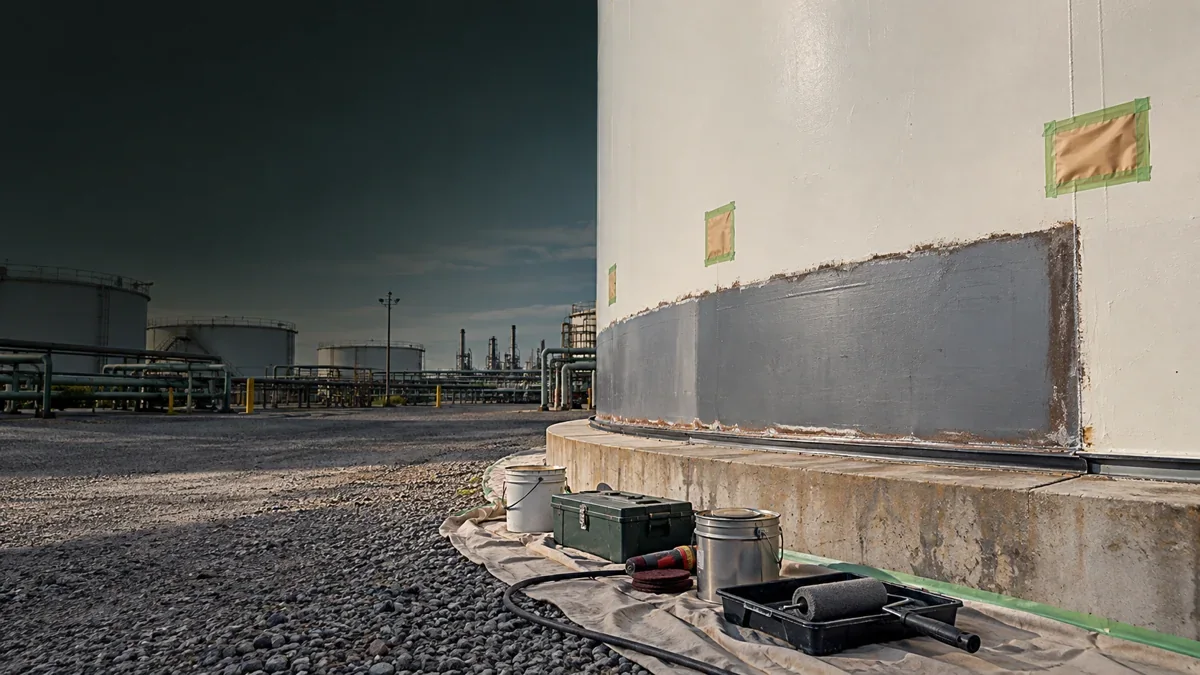
A localized repair needs a defined boundary between retained material and the prepared area. Record the extent of loose or unsuitable coating, the condition of adjacent retained material and the intended transition. The approved procedure should explain edge treatment and any compatibility checks. A fixed band height is a measurement convenience, not proof that deterioration stops at that line.
For wider deterioration, compare a full lower-shell band with localized repairs on the same basis: preparation standard, actual surface area, difficult junction work, masking, application sequence and inspection. Keep optional work separate. This lets the owner see whether a higher price reflects broader removal, more access or a different coating package, rather than comparing two descriptions that only sound equivalent.
Define the coating scope before pricing
Rust at a tank’s lower shell is easy to notice and difficult to scope from a distant photograph. Dominant Service & Supply, LLC helps define blasting and protective-coating work around the tank base, where steel, concrete, moisture and operating restrictions meet. Send the tank identification, close photographs and your specification to start a useful scope review.
Coordinate coating terminations and adjacent materials
The junction between steel and concrete needs an approved detail. A product intended for steel is not automatically suitable as a flexible seal, concrete repair material or bridge across a moving interface. Identify the termination location and any separate sealant work in the project documents. Where different materials meet, obtain the responsible manufacturer or project representative’s acceptance of the proposed arrangement.
Application access also matters at welds, narrow ledges, brackets and other details near the ground. The coating schedule should address coverage of the actual geometry, including specified stripe work, full coats, thickness checks and cure. Protect identifiers and functional connections, and identify areas that cannot be inspected adequately without additional access or an earlier work-stage release.
Plan the work around tank-farm operations
Provide the tank’s operating status and the site rules that control work beside it. The owner or authorized site team defines releases, hazardous-area restrictions, work permits and interaction with product-transfer operations. The coating proposal should identify the required work envelope and interfaces without assuming that a general maintenance request authorizes preparation anywhere around an operating tank.
Containment, abrasive handling, waste arrangements, weather limits and protected access routes belong in the initial discussion. Wind and overspray can affect adjacent assets even when the repair band is small. Divide the tank circumference into identifiable work zones if phased access is needed. Agree how temporary protections are maintained between shifts and how completed areas are protected from subsequent activities.
Use inspection records that follow the tank circumference
A useful record identifies the tank, elevation or base zone, date, preparation release and applied system. Tie required environmental readings, product batches, thickness readings, repairs and reinspection to that same location reference. Circumference segments, clock positions or an approved drawing grid can make the records usable, provided everyone applies the chosen convention consistently.
The handover should show where the work stopped as well as what was completed. Include accepted repair boundaries, unresolved exclusions, agreed cure restrictions and the inspection documents required by the contract. Coating records support acceptance of the coating package; they do not replace the separate tank-integrity records, owner operating release or engineering assessment that the overall maintenance project may require.
Send a quote package that answers the base-area questions
Start with the site address, tank identification, approximate diameter and accessible lower-shell height. Add overall views showing the foundation and surrounding equipment, then close views of the steel-to-foundation junction, seams, attachments and failed areas. Explain whether the tank is operating, what access is available and which inspection or repair decisions have already been made.
Include the issued coating specification, existing system information when available, required work window and the owner contact responsible for access. State who provides cleaning, containment, waste handling, scaffold or other access equipment, foundation work and testing. Dominant Service & Supply, LLC is based in Harvey, Louisiana and serves customer facilities and job sites. The Harvey operating base is not a walk-in storefront; field mobilization and specialized facility work are coordinated for the agreed project.
Tank Shell Base Corrosion Control FAQs
Does rust at a tank base always require a full exterior repaint?
No. The repair extent depends on the actual deterioration, retained coating condition and approved system. A localized repair, complete lower-shell band and full exterior recoat are different scopes. Compare them with defined preparation, boundaries, inspection and access rather than assuming one approach fits every tank.
Is the tank foundation included in a coating quote?
Only when the agreed scope specifically includes appropriate foundation work. Steel coating, concrete repair, drainage correction and sealant replacement have different materials and responsibilities. Identify each package before quoting so the steel coating does not conceal an unresolved foundation or moisture condition.
Can the work proceed beside an operating tank?
The owner’s operating rules, releases and hazard assessment determine what is permitted. Provide the operating status and site requirements during intake. Dominant reviews the coating work envelope and coordination needs; a website inquiry does not establish that blasting or painting is authorized beside live equipment.
What happens if blasting exposes unexpected metal loss?
The affected area should follow the agreed stop-and-review process. Record the location and notify the authorized project representative before covering it. Required tank inspection, engineering decisions and structural repairs are separate from the coating contractor’s surface-preparation and application acceptance.
Can coating bridge the steel-to-concrete junction?
Do not assume so. The approved detail must address the actual movement, moisture and materials at the interface. A steel coating is not automatically a sealant or concrete repair product. Obtain the specified manufacturer or project acceptance for any separate junction treatment.
Why does the existing seal around the base matter?
It may influence water entry, drainage, access and coating termination. Record the material and visible condition before removal. The project team should establish its purpose and replacement detail; simply coating over a deteriorated seal can leave the underlying problem unresolved.
Is surface profile the same as visible cleanliness?
No. Cleanliness describes the removal of specified contamination and coating residues; profile describes the prepared surface texture. Both may matter to the approved system. Required dust, salt or other checks are additional acceptance decisions, not automatically satisfied by a visibly bright surface.
How should repair quantities be measured?
Identify the tank circumference, lower-shell height, base projection, attachments and inaccessible areas separately. Mark localized defects on photographs or a drawing. State the measurement assumptions and how additional exposed deterioration will be reviewed so the final quantity is traceable.
What should be protected during preparation?
Identify foundation surfaces, seal details, grounding connections, labels, instruments and adjacent operating equipment that must remain intact. Also define public or operational access routes. The protection and containment plan depends on the site, chosen preparation method and neighboring activities.
Which coating product should be used at the base?
Use the approved project system for the actual substrate and exposure. Provide the existing system, service conditions and current product documents for review. There is no universal coating selection or thickness value that can be responsibly assigned to every tank-base repair.
What records should the owner receive?
The contract should define preparation releases, environmental checks, material traceability, thickness readings, repair records and cure restrictions. Tie them to the tank and work zone. These documents support coating acceptance and remain separate from tank-integrity certification or an owner’s operating release.
How do we request tank shell base corrosion-control pricing?
Send the tank identification, site, dimensions, photographs, specification, operating constraints and target dates through Request a Quote. For an urgent discussion, call or text 504-579-4330 and provide supporting details. Scope, access and project scheduling are confirmed directly before work is committed.
Discuss your coating project
Dominant Service & Supply, LLC serves Gulf Coast customer facilities and job sites from Harvey, Louisiana. Call or text 504-579-4330, or send the project details for a scoped quotation.